 Written by SKIGH DIGITAL SOLUTIONSJanuary 29, 2019 Written by SKIGH DIGITAL SOLUTIONSJanuary 29, 2019
  Written by SKIGH DIGITAL SOLUTIONSJanuary 29, 2019
 In 2025, AI-generated ad creatives are completely redefining the digital marketing landscape.
Artificial intelligence is no longer just a tool – it’s the driving force behind modern AI ad design.
From creating engaging visuals to writing smart ad copy, AI is producing content that outperforms traditional designs.
But are these AI ads truly outshining human designers, or are they just the next big trend? Let’s explore the truth behind this creative revolution. Let’s find out.
Traditional advertising relied on brainstorming sessions and endless revisions.
Now, AI ad design delivers what once took teams days, in just minutes.
This new era combines data, creativity, and automation, helping digital marketing agencies generate more conversions with less effort..
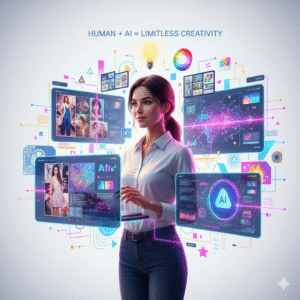
AI-generated ad creatives are images, videos, and text created by artificial intelligence.
Marketers input brand information, and AI instantly builds visually appealing and high-performing ad assets.
These systems analyse brand identity, audience behaviour, and campaign data to design ads that connect emotionally and convert efficiently.
Think of it as having a super smart design assistant who never sleeps.
AI is doing more than just helping marketers; it’s changing how ads are created and delivered.
Personalization at Scale: Every viewer can see a version of an ad made just for them.
Automatic Testing: AI runs multiple ad versions at once and finds what works best.
Faster Optimization: Campaigns adjust in real time based on performance data.
It’s like having a creative strategist and analyst all in one.
Here’s how they compare:
| Category | Human Designers | AI Generated Creatives |
| Creativity | Emotional and original | Data-backed and smart |
| Speed | Slower | Instant |
| Cost | Higher | Budget friendly |
| Adaptability | Limited | Learns and improves |
At first glance, AI-generated ad creatives seem to have the upper hand.
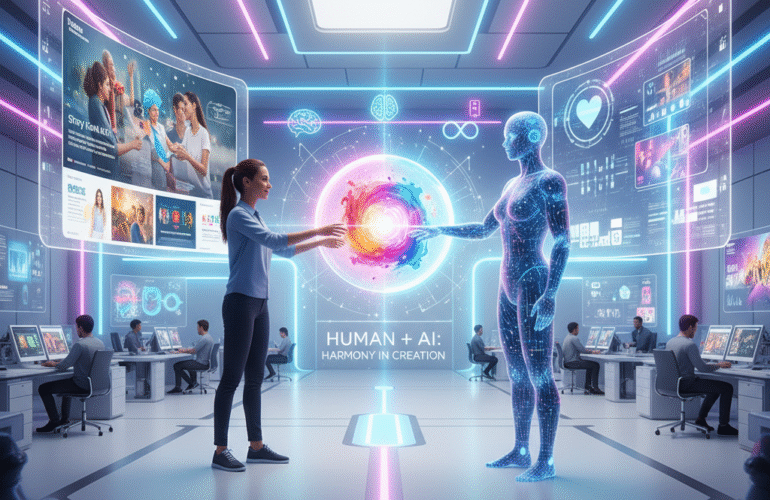
But the best results happen when humans and AI work together – human emotion combined with AI precision.
Here’s why more brands and agencies are investing in AI ad generation tools:
Save hours of manual design work.
Optimize creatives automatically.
Scale global campaigns effortlessly.
Deliver 24/7 performance monitoring.
AI-generated ad creatives don’t replace designers – they empower them to think bigger and create smarter.
AI can create, but humans can connect. That’s where we still shine.
Storytelling: Humans know how to make an audience feel something.
Emotion and Culture: AI can’t fully understand humor, sarcasm, or emotion.
Brand Voice: Staying authentic still needs a human touch.
While AI may be fast, it can’t replace the soul of human creativity.
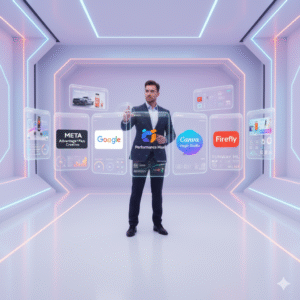
Here are some of the tools that are changing the game:
Meta Advantage Plus Creative – Creates multiple ad versions automatically.
Google Performance Max – Manages and optimizes campaigns with AI.
Canva Magic Studio – Easy ad generation with a friendly interface.
Adobe Firefly – Creates professional visuals with a touch of AI.
Runway ML – Great for AI-powered video ad creation.
These are now must-haves for marketers and designers alike.

This is the big debate.
AI doesn’t feel emotions, but it recognizes what catches attention. It studies patterns that make visuals or copy successful.
So, maybe creativity isn’t just about emotion anymore. Maybe it’s about combining human imagination with AI’s smart insights.
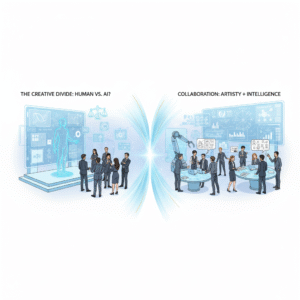
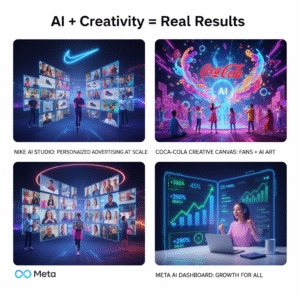
Nike used AI to create over 1,000 personalized video ads for different audiences.
Coca-Cola launched a campaign where fans co-created AI art with the brand.
Small businesses using Meta’s AI ad generator saw up to 50% better performance.
Clearly, when AI and creativity team up, the results speak for themselves.
If an AI tool makes your ad, who owns it? You, the brand, or the software?
Right now, laws are still catching up. Most companies treat AI-generated content as their property, but it’s still a gray area in copyright law.
Not really.
AI can handle repetitive stuff like resizing, testing, or generating variations. But the magic of storytelling, strategy, and emotion still belongs to humans.
In fact, AI is creating new roles like AI Creative Strategist or Prompt Designer, jobs that didn’t even exist a few years ago.
Want to stay relevant? Here’s how:
Remember, AI isn’t your rival. It’s your new creative partner.
Looking ahead, we might see ad systems that create full campaigns automatically.
But even then, human creativity will still matter, for authenticity, emotion, and ethical direction.
The future belongs to teams that blend human imagination with AI intelligence.
AI-generated ad creatives aren’t here to replace human designers. They’re here to make creativity faster, smarter, and more effective.
In 2025, the best ads come from collaboration – when humans dream and AI delivers.
That’s when creativity reaches a whole new level.
 Written by SKIGH DIGITAL SOLUTIONSJanuary 29, 2019
 The reason many tech companies fail is not a bad product/market fit, the wrong technological approach or lack of experienced CFO, but the design — not just the website UX but the design in its entirety. The way things are integrated together. The creative process.
 Written by SKIGH DIGITAL SOLUTIONSJanuary 29, 2019
 The reason many tech companies fail is not a bad product/market fit, the wrong technological approach or lack of experienced CFO, but the design — not just the website UX but the design in its entirety. The way things are integrated together. The creative process.
 Written by SKIGH DIGITAL SOLUTIONSJanuary 29, 2019
 The reason many tech companies fail is not a bad product/market fit, the wrong technological approach or lack of experienced CFO, but the design — not just the website UX but the design in its entirety. The way things are integrated together. The creative process.
 Written by SKIGH DIGITAL SOLUTIONSOctober 3, 2017
 The reason many tech companies fail is not a bad product/market fit, the wrong technological approach or lack of experienced CFO, but the design — not just the website UX but the design in its entirety. The way things are integrated together. The creative process.
 Written by SKIGH DIGITAL SOLUTIONSOctober 3, 2017
 The reason many tech companies fail is not a bad product/market fit, the wrong technological approach or lack of experienced CFO, but the design — not just the website UX but the design in its entirety. The way things are integrated together. The creative process.
 Written by SKIGH DIGITAL SOLUTIONSOctober 3, 2017
 The reason many tech companies fail is not a bad product/market fit, the wrong technological approach or lack of experienced CFO, but the design — not just the website UX but the design in its entirety. The way things are integrated together. The creative process.
 Written by SKIGH DIGITAL SOLUTIONSOctober 3, 2017
 The reason many tech companies fail is not a bad product/market fit, the wrong technological approach or lack of experienced CFO, but the design — not just the website UX but the design in its entirety. The way things are integrated together. The creative process.